I missed the Passover Seder this year.
I had just gotten out of the hospital, and I decided being around so many people so soon was probably not best for my health.
But I really missed participating in the Seder with my family and friends. I missed the food: my daughter’s matzo ball soup and her kosher for Passover kugel, desserts, knishes, and lasagna.
While the food is a big part of our Passover tradition, I missed just as much the ritual of reading from the Haggadah the story of the Israelites escaping slavery in ancient Egypt, with God’s help. As the story goes, G-d visited 10 plagues upon the Egyptians because the Pharaoh refused to release the Jews from slavery.
The Pharaoh and the rest of the Egyptians lost their firstborn sons during the tenth and final plague. The Israelites were spared as God commanded them to slay a lamb, mark their doorposts with its blood, and eat the lamb with unleavened bread. The angel of death passed over their homes, sparing the Israelites’ firstborn sons.
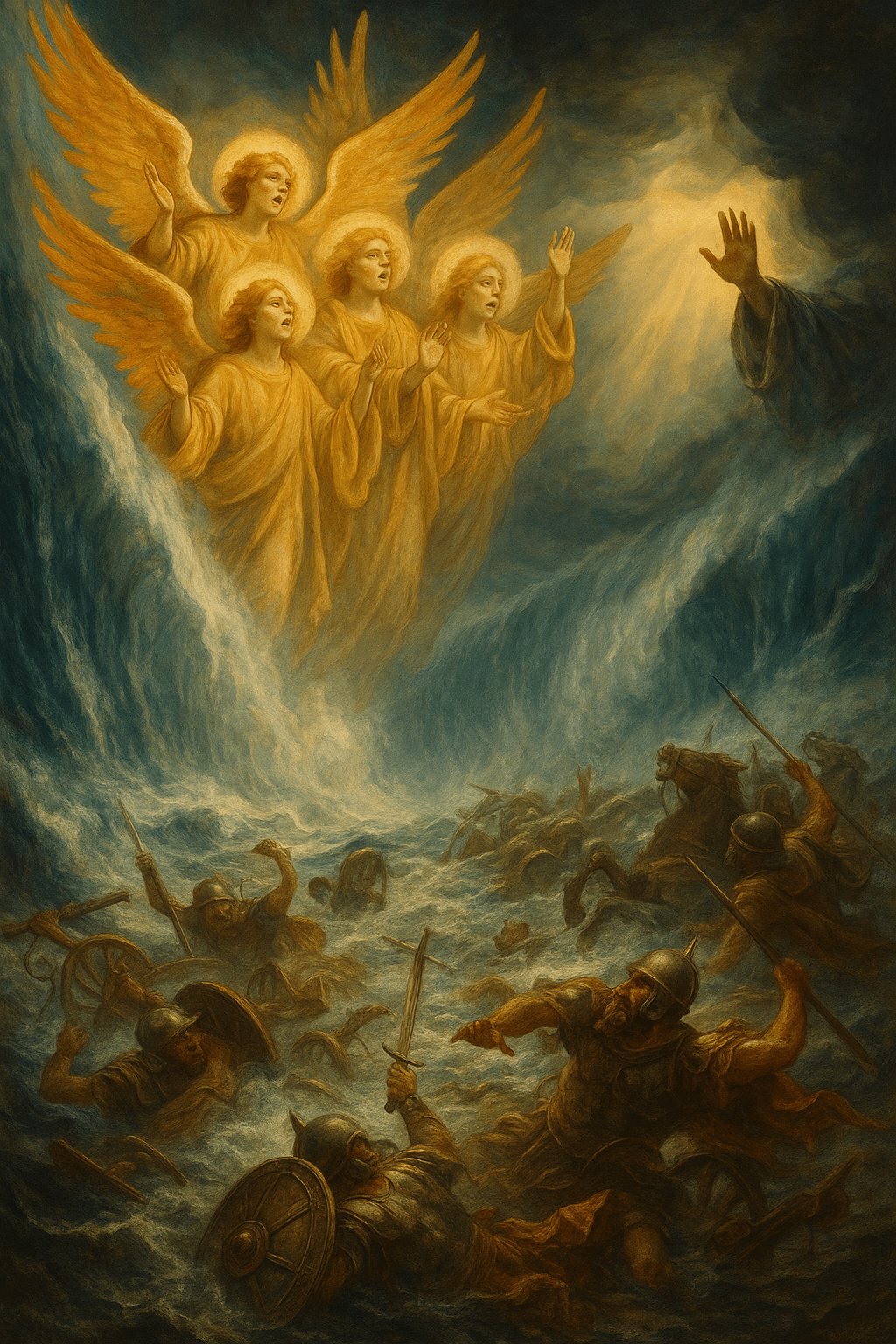
Pharaoh finally relented and let the Israelites leave. However, the Egyptian army pursued them, and the Israelites found themselves caught between the soldiers and the Red Sea. God directed Moses, the Israelite leader, to raise his staff to part the Red Sea, providing a pathway for the Israelites’ escape. The Egyptian army attempted to follow the Israelites through the parted sea, but the waters came back together, engulfing the pathway and the Egyptian soldiers.
As the waters swallowed the Egyptians, the Angels sang praises to God. God chastised his angels, declaring, “How can you sing when my children are drowning?”
God found no pleasure in destroying the Egyptians.
He commands his angels to feel for the oppressor even as he finds it necessary to wipe them out to save the oppressed.
Even if the cause is righteous, there can be no joy in another’s pain. Who are we to sing when our sisters and brothers are drowning? We are all God’s children. We should feel each other’s pain.
Empathy.
That, to me, is what Passover, and indeed my life as a Jew and a human being, is about.
It pains me to see my fellow Americans, fellow human beings, harboring ill will toward each other. It is not okay to sing the praises of those who fire people from their jobs without just cause. It is not okay to support snatching people off American streets and shipping them off to foreign locations where their rights are not protected. It is not okay to revel in another’s pain.
Empathy.
I wish everyone felt this way; it’s more than just a Passover prayer.
We close the Passover seder with the words, “Next year in Jerusalem.” Those words are not necessarily literal. They can have different meanings to different people. For me, it’s not a wish to visit Jerusalem. I choose to view these words as Michele Alperin describes in her article, “Next Year in Jerusalem: Understanding the familiar phrase in light of modern realities.”
“But our phrase also offers a more majestic sense of hope. The words ‘next year’ suggest a sense of being on the cusp but not yet having arrived, of possibility that is ripe and alive with implication. Rabbi David Hartman, in The Leader’s Guide to the Family Participation Haggadah: A Different Night, sees a ‘radical futurism’ reflected in the phrase, with its intimation of messianic possibility. He sees both the miracles of creation and the exodus from Egypt as pointing to the potential for revolutionary change–that things don’t have to be the way they are, that oppressive regimes can change.
“Every year, he writes, Jews drink four cups of wine and then pour a fifth for Elijah. ‘The cup is poured, but not yet drunk. Yet the cup of hope is poured every year. Passover is the night for reckless dreams; for visions about what a human being can be, what society can be, what people can be, what history may become. That is the significance of ‘Le-shanah ha-ba-a b’Yerushalayim‘ (Next year in Jerusalem).’ ”https://www.myjewishlearning.com/article/next-year-in-jerusalem/
Passover 2025 is over, but I hold onto the hope that my fellow human beings in the coming year will recognize we can change oppressive regimes like those so many of us are living under now. We can demand compassion for and from each other.
Next year in Jerusalem.
 Angry Black Grandma Esquire
Leave a comment