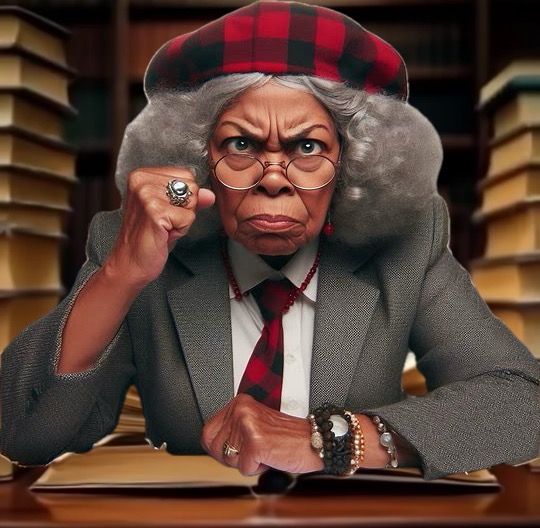
Educate Yourself, Ignite Change: Angry Black Grandma Esquire’s Must-Read Reviews
Looking to understand the complexities of race, diversity, and equity? Angry Black Grandma Esquire offers insightful and engaging reviews of books, movies, TV shows, and other media that shed light on these crucial issues. Some are old. Some are new. Some are good; others are not worth the time. Some are explicitly about diversity; others are tangentially relevant. Get the real deal on what’s worth your time. Prepare to be informed, challenged, and inspired. Beyond recommendations, the reviews are catalysts for learning, growth, and taking meaningful action in your life and community.
From Tween Troubles to Vengeful Dads: Angry Black Grandma Esquire on Paths to Justice
Angry Black Grandma Esquire tackles a middle-schooler finding her voice in the Black Lives Matter movement and two ex-con fathers seeking revenge for their gay sons. These aren’t just stories; they’re reflections on conviction, prejudice, and the often-bloody fight for justice in America, for our “woke” readers who aren’t afraid to confront uncomfortable realities.
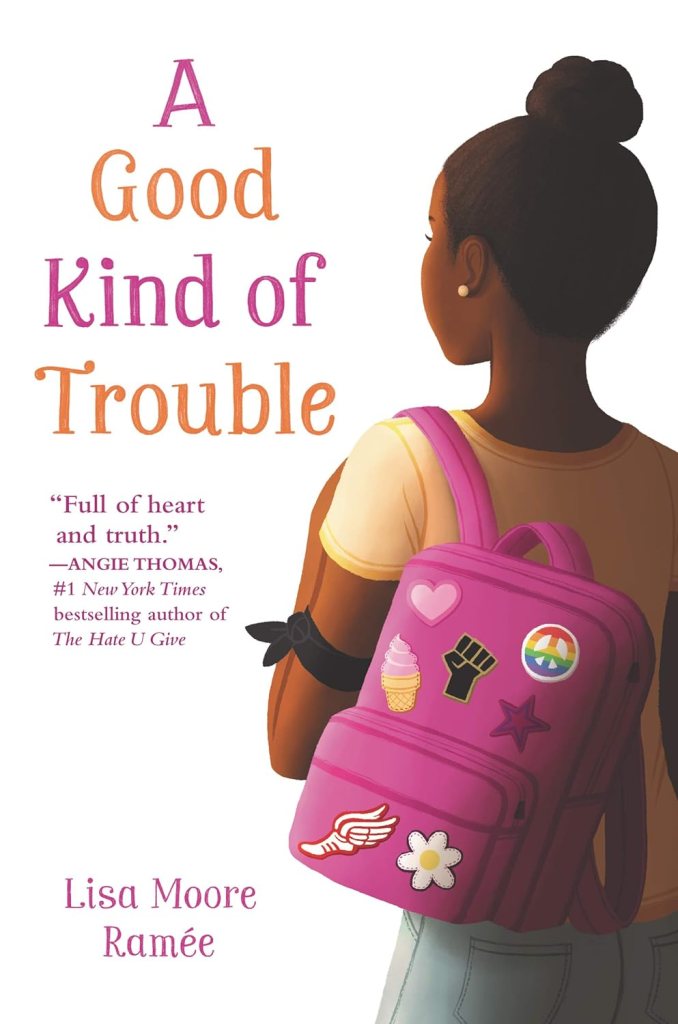
Book Review: A Good Kind of Trouble By Lisa Moore Ramee
The late, great Congressman and civil rights activist John Lewis taught us that not all trouble is bad. Sometimes, getting into trouble can be good—if it’s for a good purpose.
In Lisa Moore Ramee’s A Good Kind of Trouble, Shayla grapples with the challenges of being a 12-year-old Black junior high school girl. She struggles to see how any good can come from being in trouble, especially the kind she’s experiencing. As she puts it, she’s “allergic to trouble” and does everything she can to avoid it.
Yet, she finds herself in the midst of it all.
She deals with normal pre-teen boy troubles: boys she likes, boys she doesn’t, and boys who like her that she has no clue about. She has a crush on a boy with great eyes who is nice to her but has his sights set on someone else.
Shayla also faces best friend problems. The three friends call themselves the “United Nations” due to their different ethnicities, and race has never mattered to them before. But now, Shayla is facing criticism from her older, more militant sister, Hana, and from classmates regarding her two best friends, Isabella and Julia, because neither of them is Black. On top of that, her friends seem to be drifting away, or perhaps she is retreating from them? Shayla feels they are betraying her.
Shayla has never given much thought to her Black identity, but events and people around her are now forcing her to consider what it means to be a Black girl and a Black person in America. Recent experiences have led her to reflect deeply on her identity. When a White police officer on trial for killing an unarmed Black man is acquitted, Shayla is drawn out of her small world and into the scary, confusing realities around her.
She wants her parents to explain how the officer could go free. “She shot that man. He was walking away. It was on video.” Her parents have no answers for her.
The author powerfully captures the utter despair that so many Black Americans, in particular, have felt countless times in recent years after similar verdicts in similar trials, as Shayla laments, “I don’t know what to do.”
What she does is watch the Black Lives Matter protest march on television, fearing for her sister’s safety as Hana participates. When protestors shut down the highway, Shayla asks her father, “Isn’t that illegal?”
To which he replies, “Technically. But sometimes you have to do something that’s wrong in some people’s eyes but is morally right.”
The night’s events propel Shayla in new directions as she learns that she can do the morally right thing, even if it means inviting trouble for herself.
(Subscribe or comment to earn a chance to receive the reviewed copy of this book.)
A Good Kind of Trouble by Lisa Moore Ramee, Balzer + Bray, Copyright 2019, 384 pages.
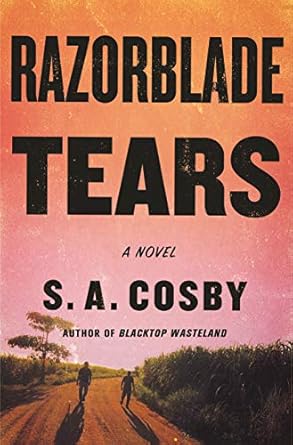
Book Review: Razorblade Tears
SA Crosby

I really wanted to like this book.

The award-winning author, SA Crosby, is known and respected for his Southern noir crime thrillers. Razorblade Tears debuted at number 10 on the New York Times bestseller list. Someone whose opinion I greatly value thoroughly enjoyed the book. The dialect that bothered me sounded authentic to her, and she loved the characters. And who can not like someone whose books Barack Obama reportedly admires?


The premise is enticing. Two fathers, one Black and the other White, join forces. They band together to avenge the murder of their gay sons. Ike “Riot” Randolph is the Black father. Buddy Lee Jenkins is the White father. They meet for the first time over their sons' graves. Soon after, Buddy Lee approaches Ike about seeking the killers. As ex-cons, they don’t have a lot of faith in the justice system. The police confirm their feelings when they give up on the case.

While hunting down the killers, the fathers must confront their guilt for rejecting their sons' marriage. They must also face the homophobia that led to the rejection of their sons while they were alive. Ike and Buddy Lee also must learn to understand and accept their differences, having come from divergent backgrounds.

The Black-White thing could have become stereotypical and annoying, but it works. Once we get past Ike discussing the challenges of being a Black man, the book shifts. It settles into a comfortable back-and-forth. The protagonists slowly start to see past their prejudices.

From the start, the book is action-packed and violent. Both ex-cons are well-versed in the use of violence. How else are ex-cons going to deal with murderous bikers?

My issue with the book is that the Kindle edition includes too many errors. Although the action moves the story, these errors are distracting. It’s a shame that the editors didn’t do a better job of catching them. Here are two examples of the mistakes:

“Ike place his hands on the end of the tamper’s handle, then placed his chin on top of his hands.”

“If he put his back into, he could probably break it.”

Maybe the editors thought this was just more southern dialect. This brings me to my next issue.

I found the dialect distracting, and the writer’s effort to offer colorful descriptions mostly irritating. The dialect may be accurate, but who wants to read a book filled with improper English?

The writer’s efforts at describing scenes are laughable. I understand the need to bring the reader in with details. Still, there are ways to do that without resorting to ridiculous analogies.

“The wound on his cheek was weeping like a broken-hearted bride.”

“The two of them had slaughtered that kid like a pig and fed him to the wood chipper like a mama bird feeding a chick.”

As with the errors, there are so many analogies that distract from the author’s purpose.

While I won’t recommend Razorblade Tears, there is enough here to make it almost good. Even with the novel’s problems, I kept thinking this could make a good movie. Most of the characters are satisfactory, though not nuanced. And if you can get past the errors and analogies, there is a decent story with a couple of worthwhile plot twists.

Razorblade Tears: A Novel by S.A. Cosby, Flatiron Books ebook, July 6, 2021, print length 329 pages.
 Angry Black Grandma Esquire
Leave a comment